 Glass is one of the most vulnerable surfaces on a construction site. Once windows and glazing have been installed, they can be exposed to cement, mortar, plaster, dust and debris as building work continues. Without suitable protection, these materials can cause scratches, staining and potentially permanent damage, resulting in costly replacements and project delays.
Protecting glass during construction is essential, particularly on large commercial developments where extensive glazing is installed long before the project reaches completion.
Fortunately, there are several ways to prevent construction materials from damaging glass, including temporary protective films, coverings and liquid-applied peelable coatings.
For a broader overview of temporary glazing protection methods, read our guide on how to protect windows during construction.
Can Cement, Mortar and Plaster Damage Glass?
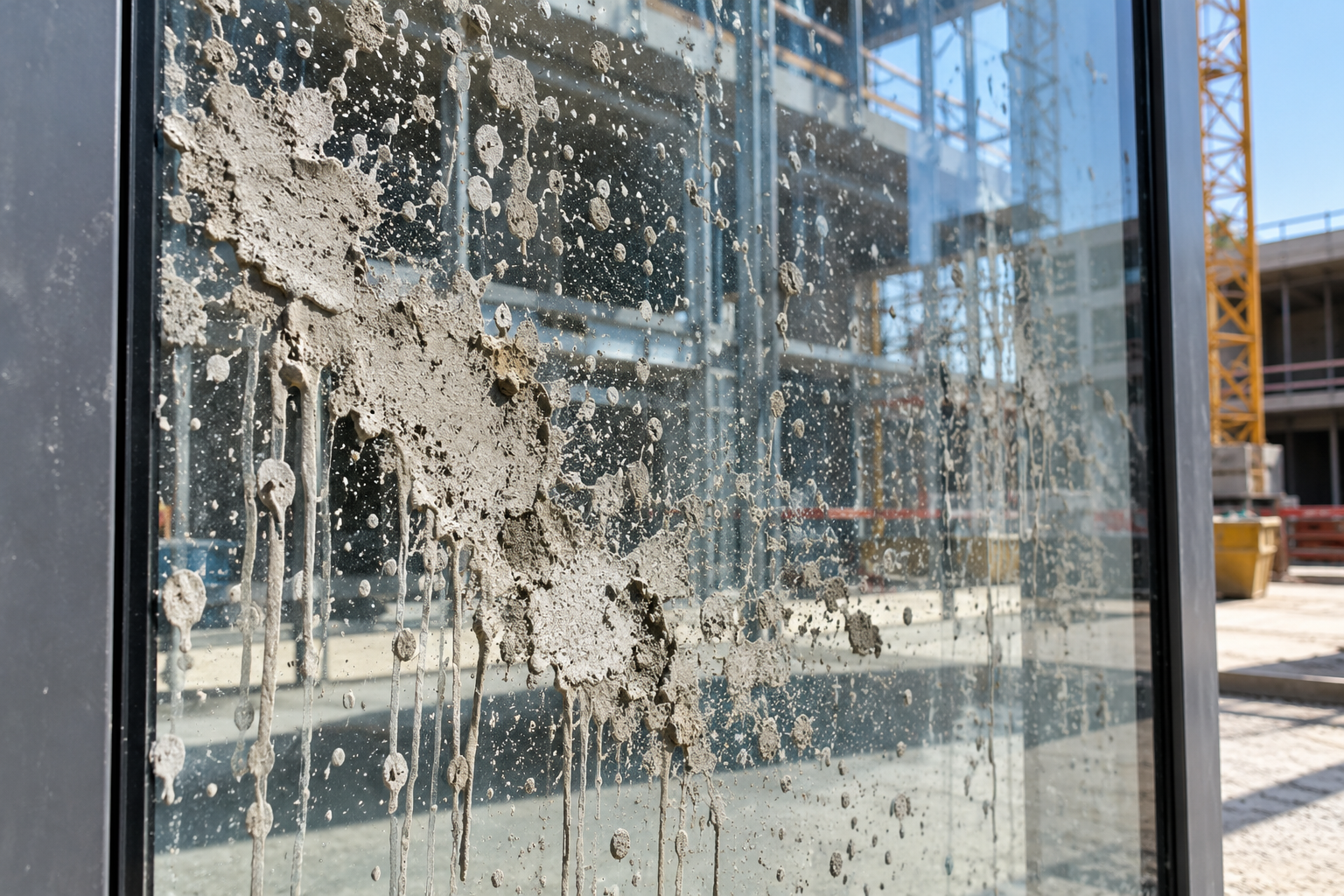
Yes. Cement, mortar and plaster can damage glass surfaces, particularly when they are allowed to dry or harden before removal.
Although glass is a durable building material, it remains vulnerable to abrasion and surface contamination during construction.
Common causes of damage include:
- Cement splashes: Cement-based materials can leave stubborn deposits on glazing, which may be difficult to remove without damaging the surface.
- Mortar contamination: Mortar contains abrasive particles that can scratch glass when deposits are rubbed or scraped away.
- Plaster residue: Wet plaster can adhere to glass, while dried deposits may require careful removal to avoid surface damage.
- Construction dust: Fine particles from cutting, grinding and other building activities can cause scratches when wiped across unprotected glazing.
- Accidental contact: Tools, equipment and building materials can scratch or damage exposed windows during construction.
Even relatively minor damage can become noticeable once the building is complete, particularly on large glass façades and architectural glazing.
Why Is Cement and Mortar Difficult to Remove from Glass?
Cement and mortar can become increasingly difficult to remove as they cure.
When cement-based materials come into contact with glass, they may leave hardened deposits that cannot be removed through ordinary cleaning.
Attempting to scrape or scrub these deposits away can introduce further problems.
For example, abrasive particles trapped between a cleaning tool and the glass can cause scratches. Inappropriate chemical cleaners may also damage certain glass coatings, frames or surrounding materials.
This makes prevention particularly important.
Rather than relying on cleaning or remedial work after contamination has occurred, contractors can reduce the risk of damage by protecting glazing before surrounding construction activities begin.
How to Protect Glass from Cement, Mortar and Plaster
Several temporary protection methods can help protect glass from cement.
The most suitable option will depend on the glazing type, project duration, environmental conditions and level of protection required.
Temporary Window Protection Film
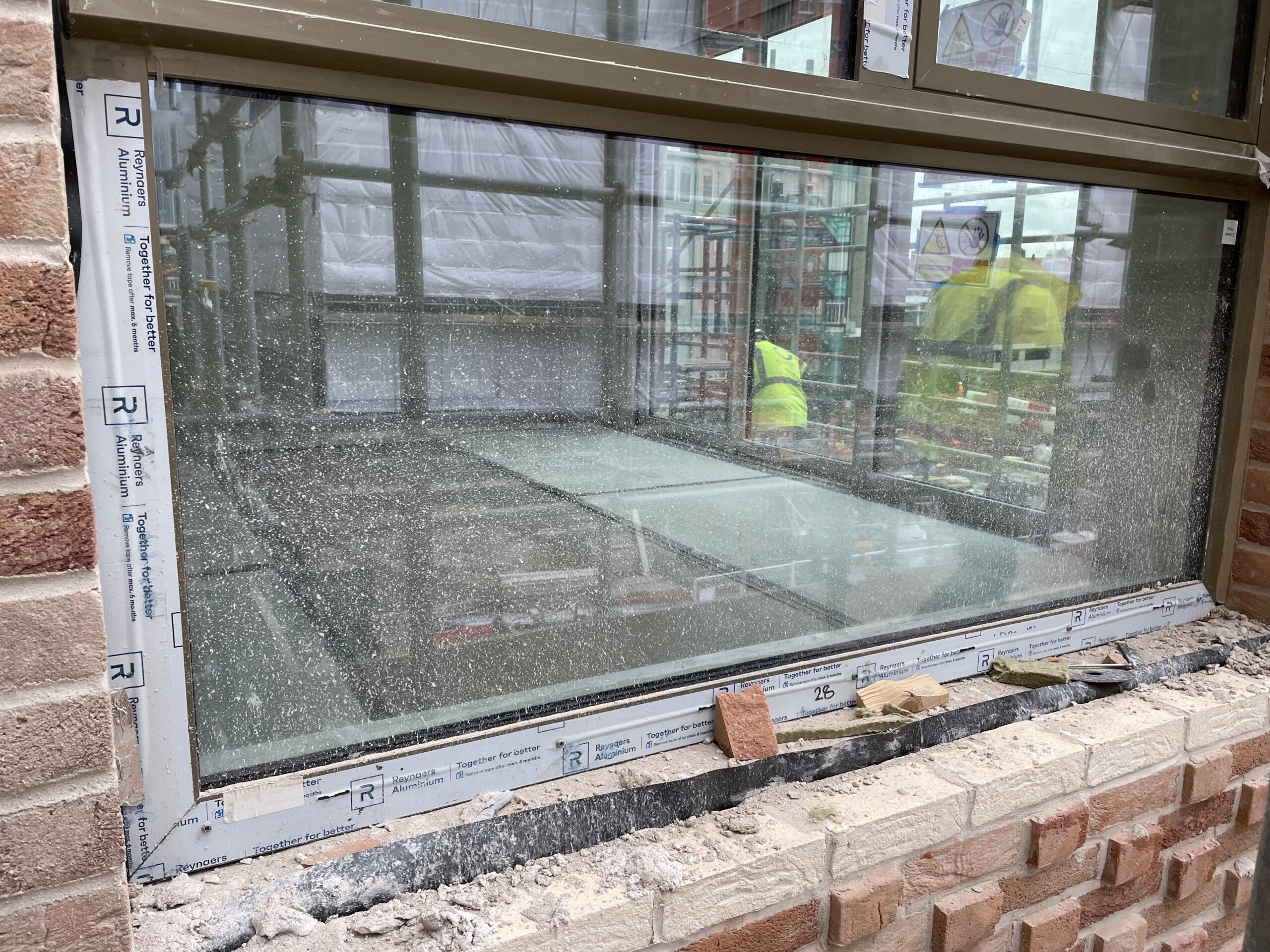
Adhesive protective films are commonly used to cover glass during construction. These films create a temporary barrier between the glazing and construction materials, helping prevent direct contact with dust, paint and other contaminants. However, protective films may present challenges on larger projects. Applying individual sheets to extensive glazing can be labour-intensive, particularly around frames, corners and irregular shapes. Adhesive films may also require careful removal, especially after prolonged exposure to sunlight or changing weather conditions.
Protective Boards and Temporary Coverings
Protective boards and plastic sheeting can provide a physical barrier against construction debris. These materials may be suitable for certain applications, particularly where additional protection against impact is required. However, boards and coverings generally need to be secured in position and may require adjustments as construction progresses. They can also restrict visibility and access to glazing.
Liquid-Applied Peelable Protective Coatings
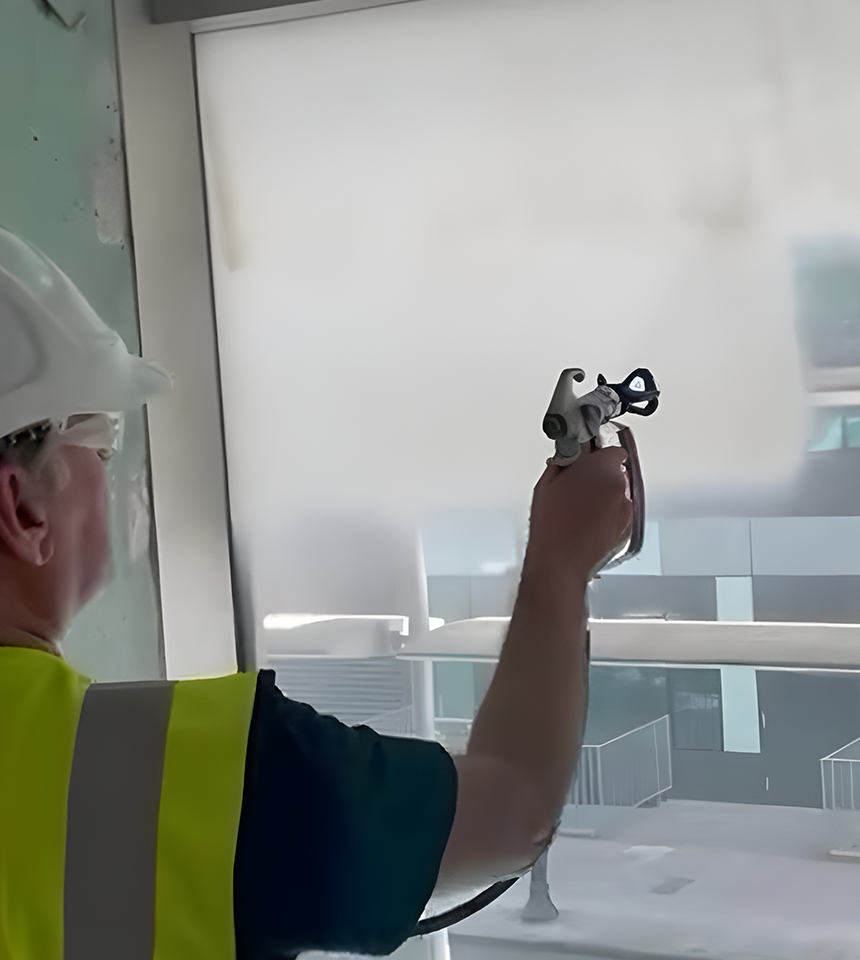
Liquid-applied protective coatings offer an alternative approach to traditional films and coverings. Rather than applying individual sheets, a temporary protective coating is applied directly to a suitable glass surface, creating a continuous protective barrier once dry. Protectapeel is a liquid-applied, peelable protective coating designed to protect surfaces throughout construction. Applied using an airless spray system, Protectapeel conforms to the shape of the surface, making it particularly suitable for large glazing areas, window frames and complex architectural designs.
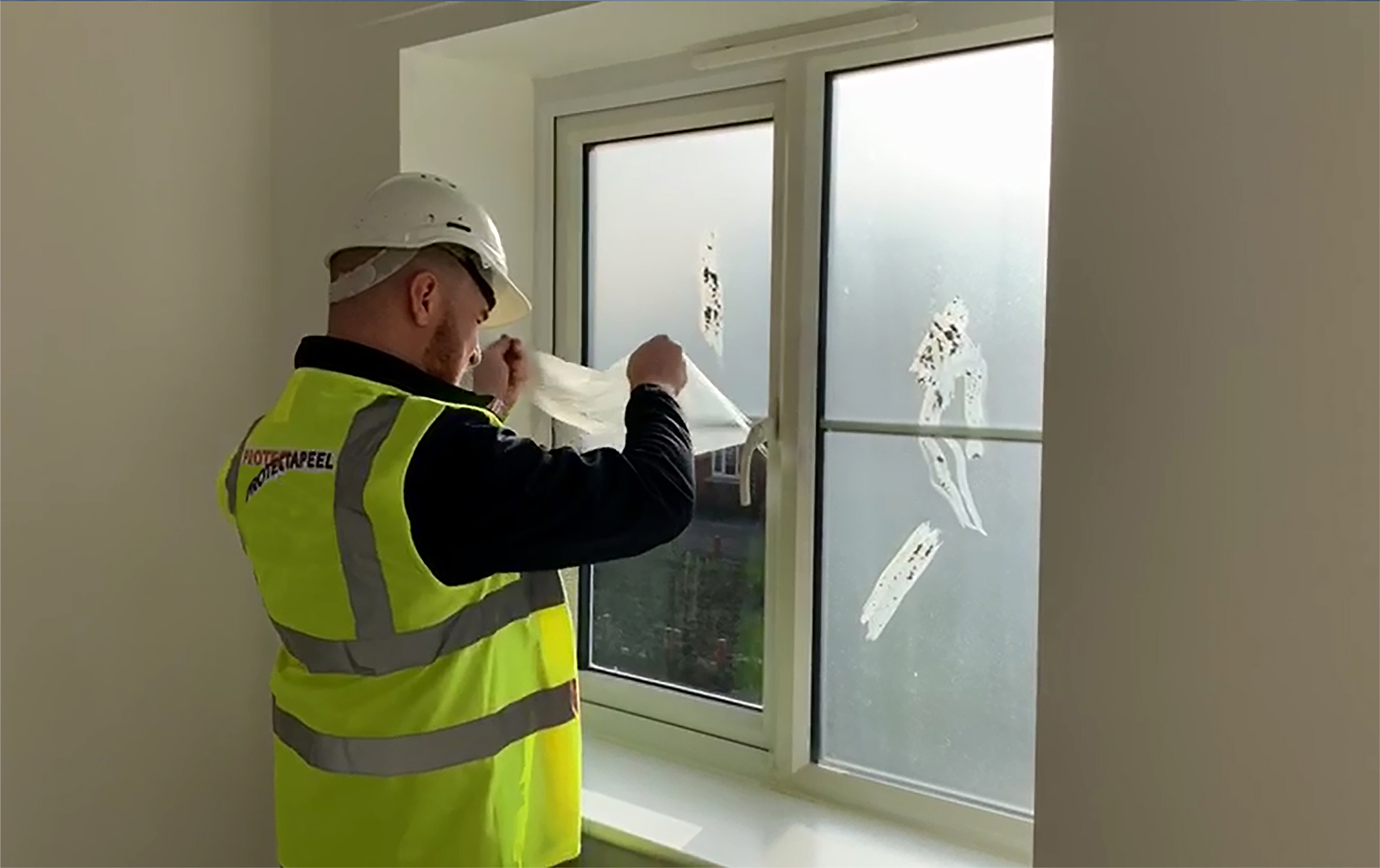
Once fully dried, the coating helps protect glass against cement and other construction contamination. When protection is no longer required, the coating can be removed by hand peeling, revealing the clean, protected surface beneath.
Not sure which protection method is most suitable? Explore our comparison of protective boards, protective films and peelable coatings to understand the advantages of each solution.
When Should Glass Protection Be Applied During Construction?
Timing plays an important role in preventing damage to newly installed glazing.
Ideally, temporary glass protection should be applied as soon as practical after installation and before surrounding construction activities begin.
This is particularly important when subsequent work involves:
- Bricklaying and blockwork
- Rendering and plastering
- Cement and concrete applications
- Cutting and grinding
- Painting and decorating
- General construction activities near glazing
Applying protection early helps reduce the period during which glass remains exposed to potential damage. For larger developments, temporary protection can remain in place throughout multiple stages of construction, provided the selected system is suitable for the exposure conditions and required duration.
Protecting Glass on Large Commercial Construction Projects
Large commercial developments often feature extensive glazing, including curtain walling, glass façades and floor-to-ceiling windows. These surfaces can remain exposed to construction activities for months before the building is completed. Damage to architectural glazing can be particularly expensive to rectify.
Replacing a damaged glass panel may involve specialist lifting equipment, additional labour and disruption to the construction programme. In some cases, replacement glazing may also require lengthy manufacturing lead times. Temporary surface protection can help reduce these risks by creating a barrier between installed glazing and surrounding construction activities.
Protectapeel has been used on major construction projects worldwide, including One Nine Elms in London and The Burj Khalifa in Dubai, demonstrating its suitability for protecting extensive glazing installations.
Can Temporary Glass Protection Be Recycled?
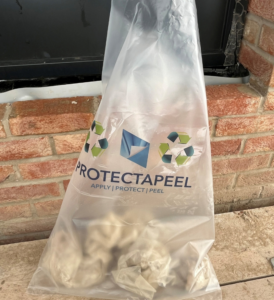 Construction projects increasingly consider the environmental impact of temporary protection materials. Traditional films, tapes and coverings can generate significant waste, particularly on developments with large areas of glazing. Protectapeel offers a more considered approach to temporary surface protection. Its recyclability has been independently verified through GreenCircle Certification, providing third-party recognition of the material’s recyclability. Once Protectapeel has been removed, the material can be collected and returned to Spraylat for recycling into other coatings, helping reduce the amount of temporary protection material sent for disposal.
Preventing Glass Damage Is Better Than Repairing It
Cement, mortar and plaster contamination can cause unnecessary damage to glazing during construction.
Although cleaning and remedial methods may be available, preventing contamination in the first place is often a more practical approach.
By selecting suitable temporary protection and applying it before surrounding building work begins, contractors can reduce the risk of scratches, staining and costly glazing replacements.
Whether protecting individual windows or extensive commercial façades, choosing the right surface protection method can help preserve the quality of installed glazing throughout the construction programme.
Protectapeel provides a liquid-applied alternative to traditional protective films and coverings, helping protect suitable glazing surfaces until construction is complete.
Discover how Protectapeel can help protect your glazing and other finished surfaces throughout construction.