
Protectapeel EtchProtect 284/6
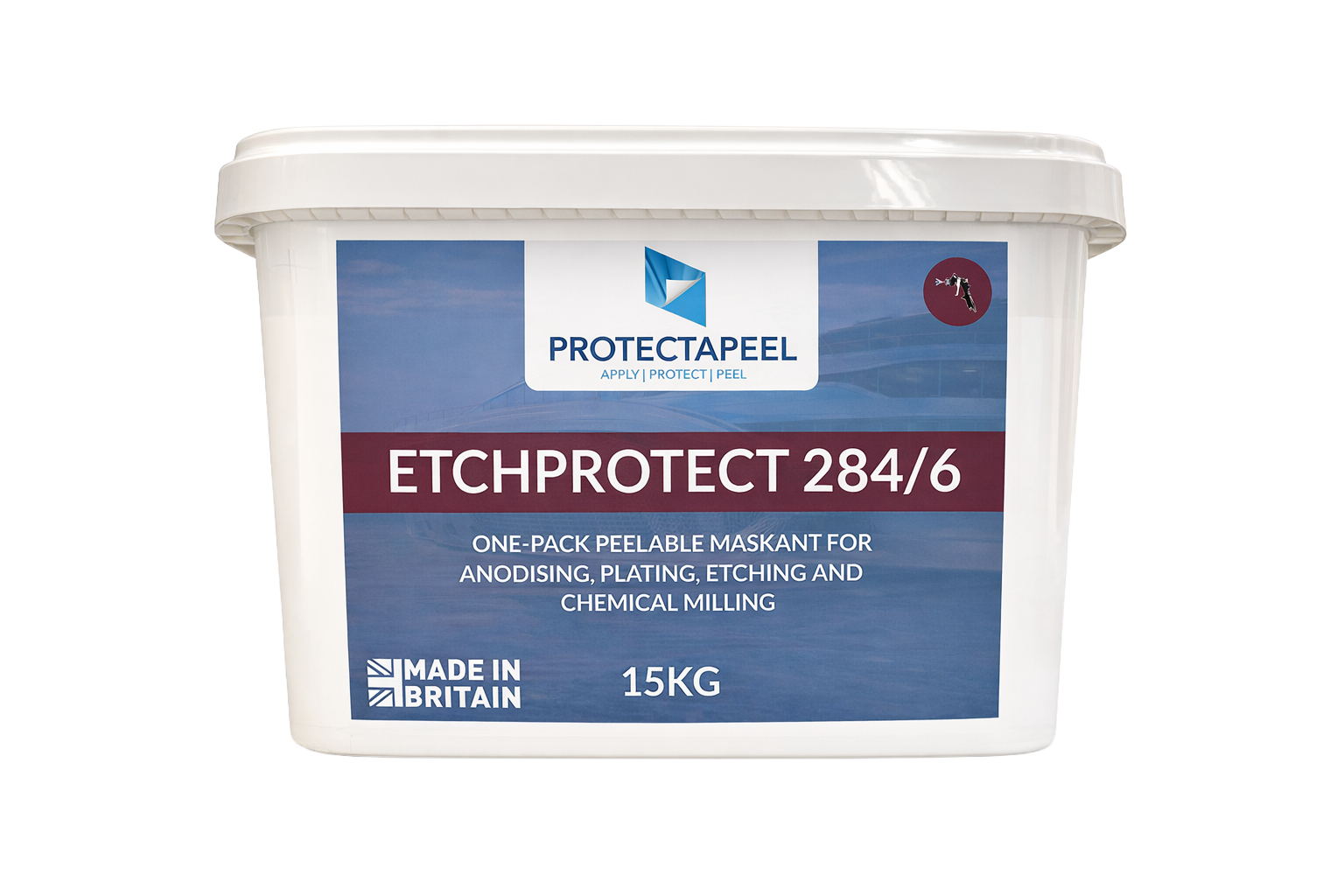
Protectapeel EtchProtect 284/6 chemical milling maskant is a solvent based, one-pack, peelable coating used for the chemical treatment of metals such as; anodising, plating, etching and chemical cutting.
| Use | Maskant |
|---|---|
| Container Size | 15 KG, 25 KG, 200KG |
| Coverage Rate | 2m² per Kilo |
| VOC | 635 gl -1 |
| Material | Solvent Based |
| Colour | Red |
| Glass | Aluminium | Mild Steel | Acrylic | PVCu | Painted Aluminium | Wood/Timber | Polished Concrete |
|---|---|---|---|---|---|---|---|
Capability Statement
Product Capabilities & Performance
Chemical Milling, Etching & Pickling
Protectapeel Etchprotect 284/6 chemical milling maskant is designed for use during chemical milling, etching and pickling processes. Used and trusted worldwide since 1992, we have supplied maskants to companies such as Standex, Mold Tech, GKN and BAE.
Formulated to withstand aggressive chemical environments, Protectapeel provides a durable barrier that protects selected areas of metal components during material removal processes. This ensures precise etching while maintaining clean, defined edges and protecting critical surfaces from unwanted exposure. The coating adheres strongly to a wide range of metal substrates, including aluminium, stainless steel and specialist alloys commonly used in aerospace, engineering and precision manufacturing.
Protectapeel chemical milling maskant can be easily applied by spray, brush or roller to suit different production environments and component geometries. Once cured, the coating forms a flexible, uniform film that resists the chemicals used in milling and etching operations while remaining simple to remove by hand when the process is complete. The peelable nature of the product eliminates the need for harsh stripping methods and helps maintain the integrity of the underlying surface.
By providing reliable masking performance and straight-forward removal, Protectapeel helps manufacturers improve process efficiency, reduce preparation time and minimise costly rework. Its versatility and proven performance make it a trusted solution for protecting critical components during precision chemical processing.
service related FAQ’s
Protectapeel is primarily supplied in 15-kilo containers. For larger projects, IBCs are also available.
Protectapeel provides a peelable coating that protects glass from scratches, dirt, and damage during construction. It is easily applied using an airless spray gun, reducing labour requirements on-site. Once the project is complete, the coating can be effortlessly peeled away, leaving the glass clean and undamaged.
Yes, applying Protectapeel Top Coat on top of Protectapeel Original creates a waterproof barrier that effectively protects surfaces from moisture and contaminants.
Protectapeel offers a simple solution for protecting countertops during construction. It can be applied directly without the need for measuring, cutting, or taping. Simply spray it on, allow it to dry, and it will shield countertops from damage such as scratches, mortar, and paint overspray. Before application, you must always apply the Protectapeel product to a small test area to test the substrate’s suitability. You must ensure that all substrates are well covered. Allow the product to dry for 48 hours, and then check that the Protectapeel product will peel away from each substrate.
Yes, Protectapeel can be applied to non-porous door and window frames to protect from damage caused by scratching, plaster, or weather exposure. Before full application, you must always apply the Protectapeel product to a small test area to test the substrate’s suitability. You must ensure that all substrates are well covered. Allow the product to dry for 48 hours, and then check that the Protectapeel product will peel away from each substrate.