
Protectapeel Asbestos Encap
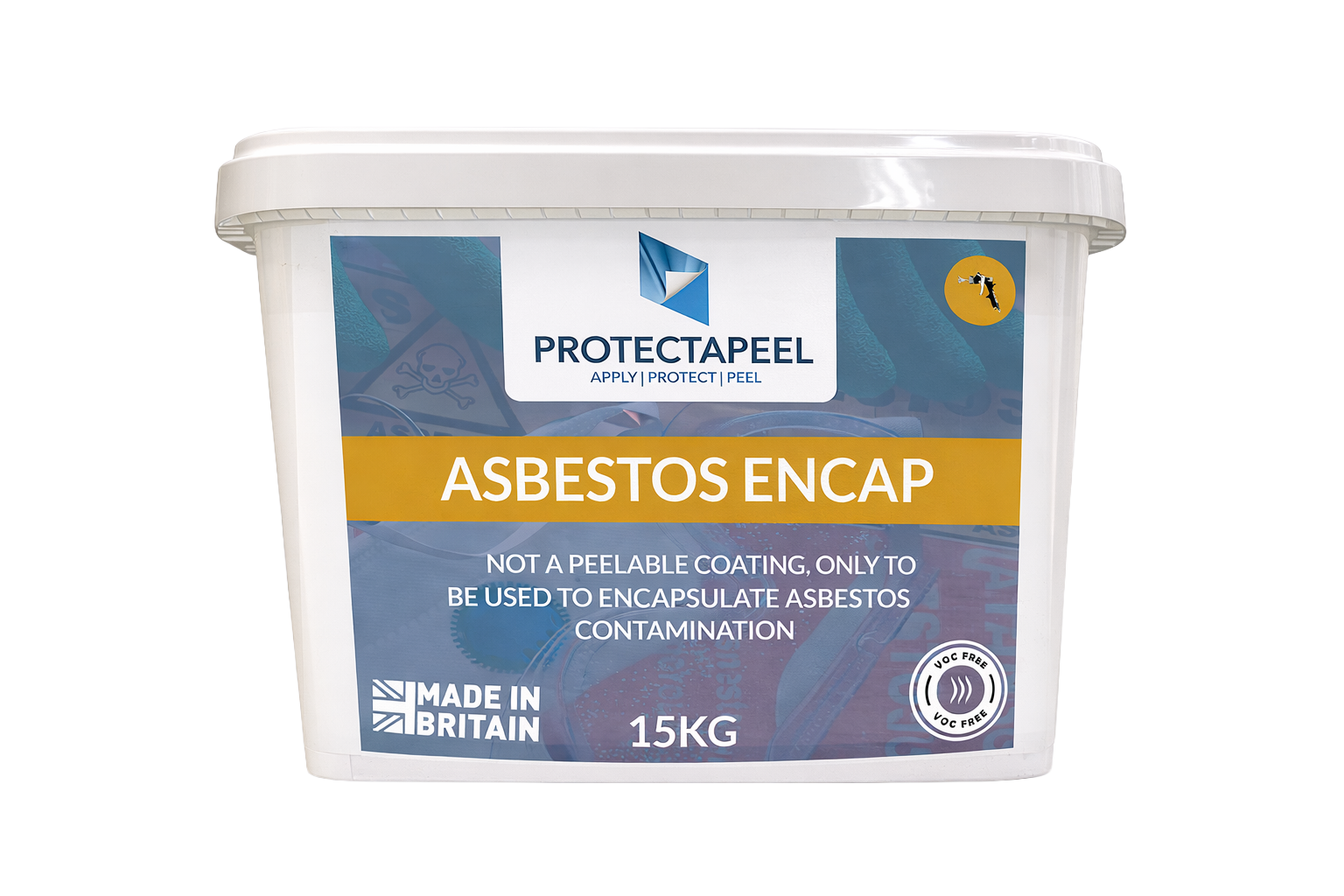
Protectapeel Asbestos Encap is an asbestos encapsulation coating used to seal and protect asbestos-contaminated surfaces. Acting as both an encapsulant and fibre tie-down coating, it helps prevent the release of airborne asbestos fibres during refurbishment, maintenance, remediation, and preparatory works.
| Use | Encapsulation |
|---|---|
| Container Size | 15 KG, 25 KG, 200KG |
| Coverage Rate | 4m² per Kilo |
| VOC | 0 gl -1 |
| Durability | Long Term |
| Colour | White |
| Glass | Aluminium | Mild Steel | Acrylic | PVCu | Painted Aluminium | Wood/Timber | Polished Concrete |
|---|---|---|---|---|---|---|---|
Capability Statement
Product Capabilities & Performance
Post Fukushima Decontamination Testing
Following the Fukushima nuclear disaster in 2011, Protectapeel asbestos coatings underwent testing as part of decontamination and contamination-control assessments in high-risk environments. The product demonstrated its ability to encapsulate and remove surface contaminants effectively, helping to reduce the spread of hazardous particles during clean-up operations. This real-world testing highlighted Protectapeel’s suitability for demanding applications where safe, efficient surface decontamination is critical.
Asbestos Coatings
Protectapeel asbestos coatings can help minimise the risk of asbestos fibre release during refurbishment and demolition projects by providing a temporary encapsulating barrier. Its use can reduce reliance on traditional containment methods, helping to simplify asbestos management procedures.
The coating supports more efficient remediation programmes by allowing work to be carried out with greater control and flexibility. By reducing the potential for fibre disturbance, it helps maintain a safer working environment for operatives on site. These benefits can contribute to shorter project times and lower overall remediation costs.
service related FAQ’s
Protectapeel is applied using an airless spray gun, eliminating the need for measuring or cutting to size (if you used protective film or board). It is quickly applied taking just 49 seconds per m².
Once the windows are installed, apply Protectapeel immediately to protect them during finishing works.
No, Protectapeel peels off cleanly without leaving any adhesive or residue on the surface.
Yes, Protectapeel is eco-friendly and recyclable after removal, making it a sustainable choice for surface protection. For more information about our free Recycle Point service click here.
Yes, Protectapeel can be applied to a range of non-porous surfaces, including flooring, sanitary basins, countertops, windows, frames, and doors. Before project handover, it can be easily removed by hand peeling, revealing clean, undamaged surfaces without delays or additional costs. Before application, you must always apply the Protectapeel product to a small test area to test the substrate’s suitability. You must ensure that all substrates are well covered. Allow the product to dry for 48 hours, and then check that the Protectapeel product will peel away from each substrate.