
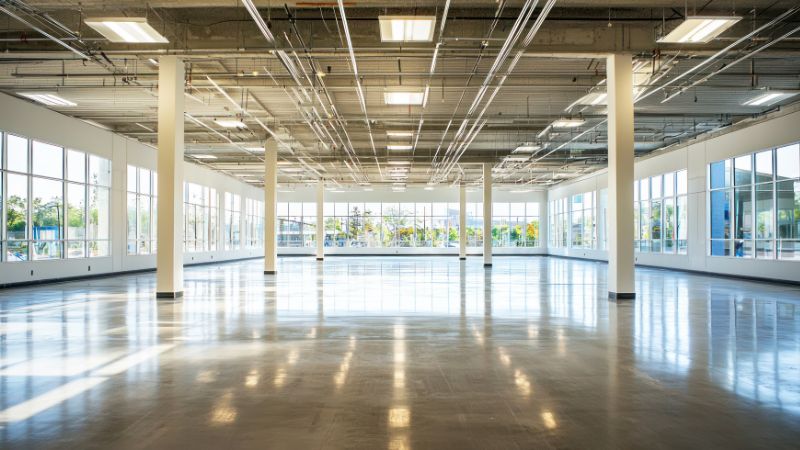
Polished concrete has become one of the most popular flooring choices for commercial buildings, residential developments, retail spaces and public facilities. Its sleek appearance, durability and low maintenance requirements make it an attractive option for architects, contractors and property owners alike.
However, polished concrete is often completed before construction works are fully finished, leaving it vulnerable to damage from ongoing site activities. Knowing how to protect polished concrete flooring during construction is essential to avoid expensive repairs, project delays and dissatisfied clients.
This guide explains the most common types of polished concrete damage, the costs associated with repairs, and why peelable protective coatings such as Protectapeel FloorDefend provide one of the most effective ways to protect polished concrete flooring during construction and fit-out projects.
Why Polished Concrete Needs Protecting During Construction
Although concrete is known for its strength, polished concrete surfaces are surprisingly susceptible to cosmetic and structural damage during the final stages of construction.
Trades working above finished floors can unintentionally cause scratches, staining, impact damage and contamination. Once damage occurs, repairs can be time-consuming, expensive and often fail to restore the floor to its original appearance.
Protecting polished concrete from the moment it is completed until project handover is essential for maintaining quality and avoiding costly remedial work.
Common Types of Polished Concrete Damage
Scratches & Abrasion
One of the most frequent causes of damage is foot traffic and the movement of equipment across the floor. Common sources include;
- Scissor lifts
- Mobile towers
- Material trolleys
- Pallets and deliveries
- Dragged tools and equipment
Even minor scratches can become highly visible on polished surfaces, particularly under natural or directional lighting.
Paint, Plaster & Contamination
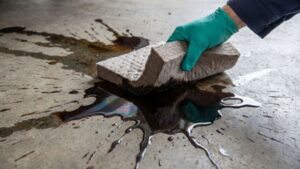 Construction sites generate a wide range of contaminants that can permanently affect polished concrete. Examples include:
- Paint overspray
- Plaster splashes
- Adhesives & sealants
- Oils & greases
- Cleaning chemicals
Many of these substances penetrate the surface or leave staining that is difficult to remove without specialist treatment.
Impact Damage
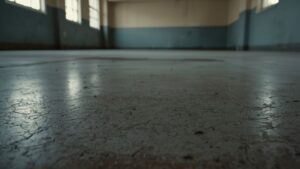 Dropped tools, fixtures and construction materials can chip or crack polished concrete. Common causes include:
- Steel sections
- Glass panels
- Hand tools
- Mechanical equipment
- Heavy deliveries
Impact damage often requires localised grinding and refinishing, which can result in visible patch repairs.
Tyre Marking & Surface Wear
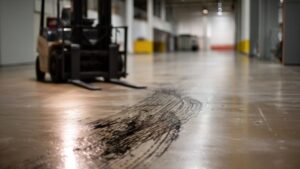 Rubber wheels from site equipment can leave marks or create abrasion patterns across polished floors. Frequent traffic during construction can also reduce gloss levels, resulting in inconsistent appearance at handover.
Water & Moisture Damage
Standing water, wet trades and cleaning activities can introduce contaminants or leave mineral deposits on polished surfaces. If not addressed quickly, moisture-related issues can affect the floor’s final appearance.
The Cost of Repairing Damaged Polished Concrete
Repair costs vary depending on the severity of the damage, floor specification and project location. However, even minor repairs can become surprisingly expensive. Typical costs may include:
- Light scratch removal (£10-£30 per m²)
- Re-polishing affected areas (£25-£60 per m²)
- Chip & crack repairs (£100-£500+ per repair)
- Large area restoration (£1,000+)
- Project delays and labour (Often exceed repair costs)
The reality is simple: preventing damage is significantly cheaper than repairing it.
Traditional Methods of Polished Concrete Protection
Several protection methods are commonly used on construction projects.
Protective Boards
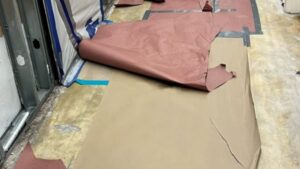 Temporary floor protection boards provide impact resistance but can introduce challenges:
- Gaps between sheets expose the floor
- Dirt & debris become trapped underneath
- Moisture can accumulate beneath the boards
- Installation & removal require significant labour
Plastic Sheeting
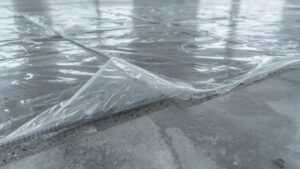 Plastic films offer basic coverage but often suffer from:
- Movement during construction
- Tearing & punctures
- Limited impact protection
- Trip hazards
Why Peelable Coatings Are More Effective
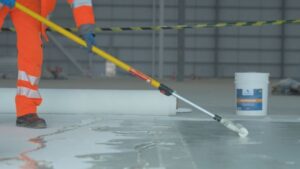
Peelable protective coatings provide a completely different approach to floor protection.
Instead of covering the floor with loose materials, the coating is applied directly to the polished concrete surface, forming a continuous protective barrier.
For contractors looking to protect polished concrete flooring during construction, this approach eliminates many of the weaknesses associated with traditional protection methods.
The key benefits include:
Full Surface Coverage
Protectapeel FloorDefend is a peelable coating conforms to the entire floor surface, leaving no exposed gaps or vulnerable edges.
Protection Against Contamination
Paint, plaster, sealants and construction debris remain on the protective layer rather than contacting the polished concrete itself.
Scratch & Abrasion Resistance
The coating absorbs daily wear from foot traffic, equipment and site activities, helping preserve the original polished finish.
Easy Removal
Once construction is complete, the coating peels away cleanly, revealing the protected floor underneath.
Reduced Labour Costs
Application is typically faster than laying boards or other temporary protection materials, as no measuring or taping is needed, helping contractors save time and labour throughout the project.
Why Contractors Choose Protectapeel FloorDefend
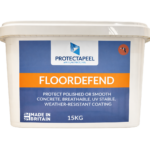 Protectapeel FloorDefend is a breathable composite floor protection system designed for protecting polished concrete during construction. The liquid-applied coating temporarily bonds to the floor, creating a seamless, durable barrier that resists abrasion, staining, impact damage, UV exposure and adverse weather conditions. Its unique peelable design provides reliable protection throughout the build process while allowing for fast, clean removal at project completion.
Key advantages include:
- Fast application
- Continuous protection for 24 months
- Resistance to site contaminants
- No adhesion loss
- No trapped debris under the layers
- Easy peelable removal
- Reduced repairs and labour requirements
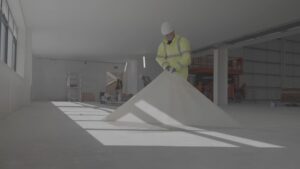 Unlike traditional boards and coverings, Protectapeel FloorDefend becomes part of the floor protection system itself, creating a secure barrier that remains in place throughout the construction phase.
Protect Polished Concrete Flooring During Construction
Polished concrete floors represent a significant investment in any construction project. Leaving them exposed during the final stages of construction creates unnecessary risk and potential expense.
By implementing an effective protection strategy from the outset, contractors can avoid costly repairs, maintain project quality and ensure floors look exactly as intended at handover.
Protectapeel FloorDefend provides a practical, efficient and cost-effective way to protect polished concrete throughout the construction process, helping deliver flawless floors from completion to client handover.
Looking for a smarter way to protect polished concrete on your next project? Contact the Protectapeel team today to discuss your requirements and find out how FloorDefend can help reduce repair costs and improve project outcomes.
It’s easy to think of construction as finished once the floor is installed, but this is a good reminder that the surface still needs protection while other work is going on around it. I especially liked the examples of damage from tools, equipment, spills, and foot traffic. Protecting a finished floor early can definitely save a lot of unnecessary repair work later.
Great tips! Properly protecting polished concrete floors during construction helps prevent scratches, stains, and costly damage while preserving their finish. https://www.concreteprosbend.com/