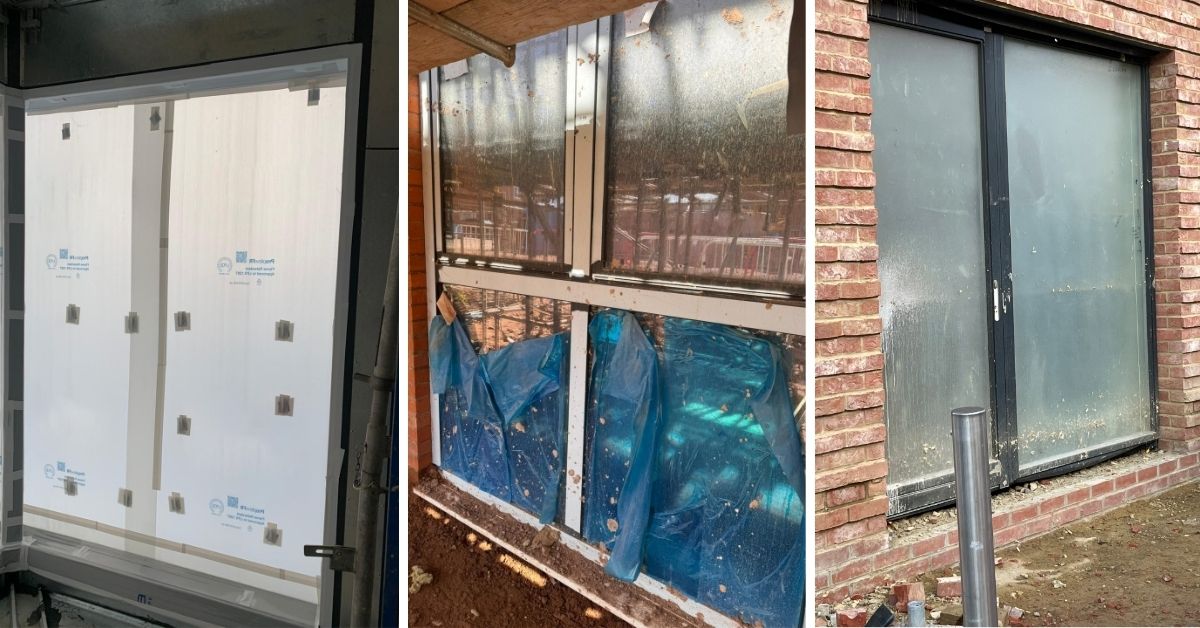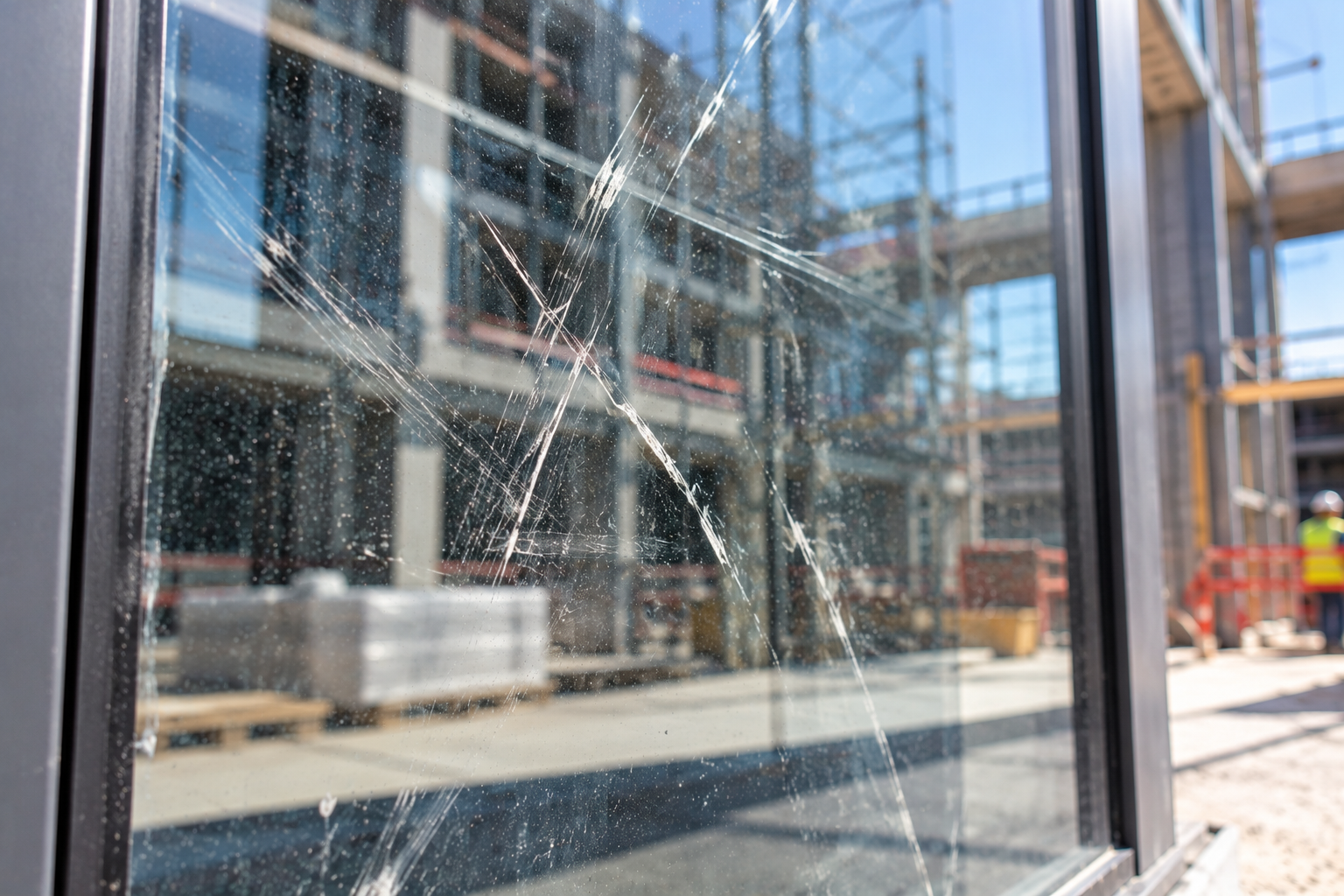
Scratched glass is a common and costly problem on construction sites. From newly installed windows to large commercial glazing systems, glass surfaces can be exposed to damage long before a building is completed. Construction dust, abrasive debris, tools and ongoing building activities can all leave scratches that compromise the appearance of finished glazing.
For contractors and developers, scratched glass can result in expensive replacements, remedial work and project delays. On large developments featuring extensive glazing, even minor surface damage can become a significant issue.
Understanding how to prevent scratches on glass during construction is essential for protecting newly installed windows, maintaining quality standards and avoiding unnecessary costs.
What Causes Scratches on Glass During Construction?
Although glass is a durable building material, its surface can be scratched when exposed to abrasive materials or inappropriate cleaning methods.
Construction sites present several risks, particularly when glazing is installed during the early stages of a project.
Construction Dust and Abrasive Debris
 Dust generated by cutting, drilling, grinding and other construction activities can settle on exposed glazing. Some construction dust contains hard, abrasive particles that can scratch glass when rubbed across the surface. Even routine cleaning can cause damage if these particles are not removed correctly.
Cement, Mortar and Plaster
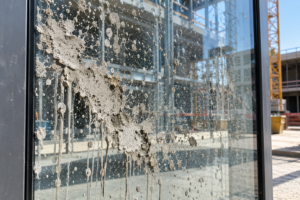 Cement, mortar and plaster splashes can adhere to glazing during surrounding building work. Once these materials have dried, removing them can be difficult. Scraping or rubbing hardened deposits across the glass may cause scratches. Preventing direct contact is often more effective than attempting to remove stubborn contamination afterwards. Read our guide for further information on protecting from cement, mortar and plaster.
Tools and Construction Equipment
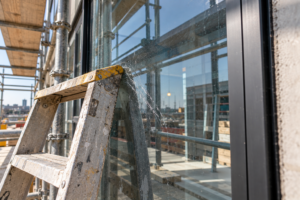 Glass can also become scratched through accidental contact with tools, ladders, scaffolding and construction materials. These risks increase when multiple trades work around newly installed windows or curtain walling.
Incorrect Cleaning Methods
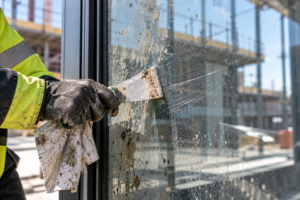 Cleaning is another common source of glass damage. Using abrasive pads, unsuitable scrapers or contaminated cloths can introduce scratches, particularly when construction debris remains on the surface.
Glass with specialist coatings may require additional precautions and manufacturer-approved cleaning methods.
Why Is Scratched Glass a Problem on Construction Projects?
Scratches can affect the appearance of glazing, particularly when viewed in direct sunlight or across large glass façades. While some minor marks may be assessed for specialist remedial treatment, deeper scratches can be difficult or impossible to repair to the required standard. In some cases, complete glass replacement may be necessary.
For construction projects, this can lead to several additional costs:
- Replacement glazing: Specialist glass panels may be expensive to manufacture and replace.
- Additional labour: Removing and reinstalling damaged glazing can require specialist contractors.
- Access equipment: Large façades may require lifting equipment, scaffolding or other access arrangements.
- Project delays: Replacement glazing may have lengthy manufacturing lead times.
- Remedial work: Surrounding finishes or components may need attention during replacement.
On commercial developments with thousands of square metres of glazing, preventing scratches can help reduce the risk of substantial remedial costs.
How to Prevent Scratches on Glass During Construction
The most effective approach combines good site practices with suitable temporary glass protection. Newly installed glazing should be protected as soon as practical, before surrounding construction activities begin.
Leaving windows exposed during bricklaying, plastering, painting and other building work increases the risk of accidental damage. Applying temporary protection early helps create a barrier between the glass and potential sources of scratches.
For a broader overview of available protection methods, read our guide on how to protect windows during construction.
Can Window Protection Film Prevent Scratches?
Window protection films are commonly used to protect glazing during construction. These films provide a temporary barrier against dust, paint and light surface contamination. However, their effectiveness depends on correct application, film specification and site conditions. Traditional adhesive films may require individual sheets to be cut and fitted around frames, corners and irregular glazing shapes.
On large commercial projects, this process can become time-consuming. Some films may also present removal challenges following prolonged exposure to sunlight or changing weather conditions.
For projects requiring extensive glazing protection, alternative systems may offer practical advantages.
How Do Liquid-Applied Coatings Help Prevent Glass Scratches?
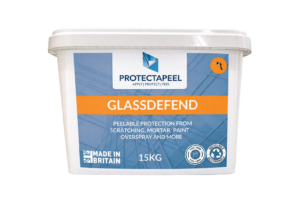 Protectapeel is a temporary protective coating designed to prevent scratches on glass during construction.
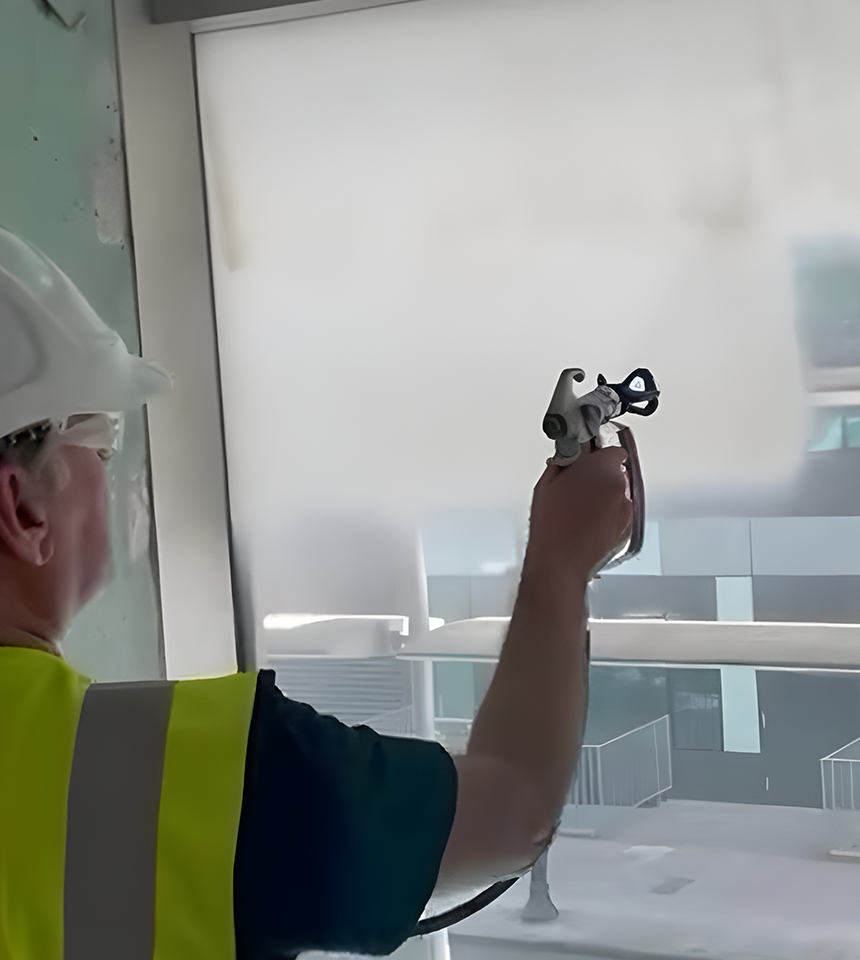
Applied using an airless spray system, Protectapeel forms a continuous protective barrier once fully dried. Unlike individual sheets of protective film, liquid-applied coatings can conform to large surfaces, curved areas and complex shapes, providing coverage without the need to cut and fit multiple sections.
Protectapeel GlassDefend is designed for internal glazing applications, while suitable external construction coatings are available for glazing exposed to outdoor conditions.
Protecting Glass on Large Commercial Construction Projects
 Preventing scratches becomes particularly important on large developments featuring extensive curtain walling and architectural glazing. These projects often involve multiple contractors working simultaneously, increasing the risk of accidental contact, dust contamination and surface damage. Once glazing has been installed, it may remain exposed for months before the building is completed. Temporary protection helps safeguard these finished surfaces throughout subsequent construction activities.
Preventing Glass Scratches Starts with Effective Protection
Scratched glazing can create unnecessary costs, delays and remedial work on construction projects.
Although careful handling and appropriate cleaning practices help reduce the risk of damage, temporary surface protection provides an additional barrier against construction-related hazards.
By protecting newly installed glass before surrounding building activities begin, contractors can help preserve the appearance and quality of finished glazing.
Protectapeel provides a liquid-applied, peelable solution for protecting suitable glass surfaces throughout construction, helping reduce the risk of scratches and costly replacements.
Get in touch to discuss how Protectapeel can help protect your glazing throughout the construction programme.