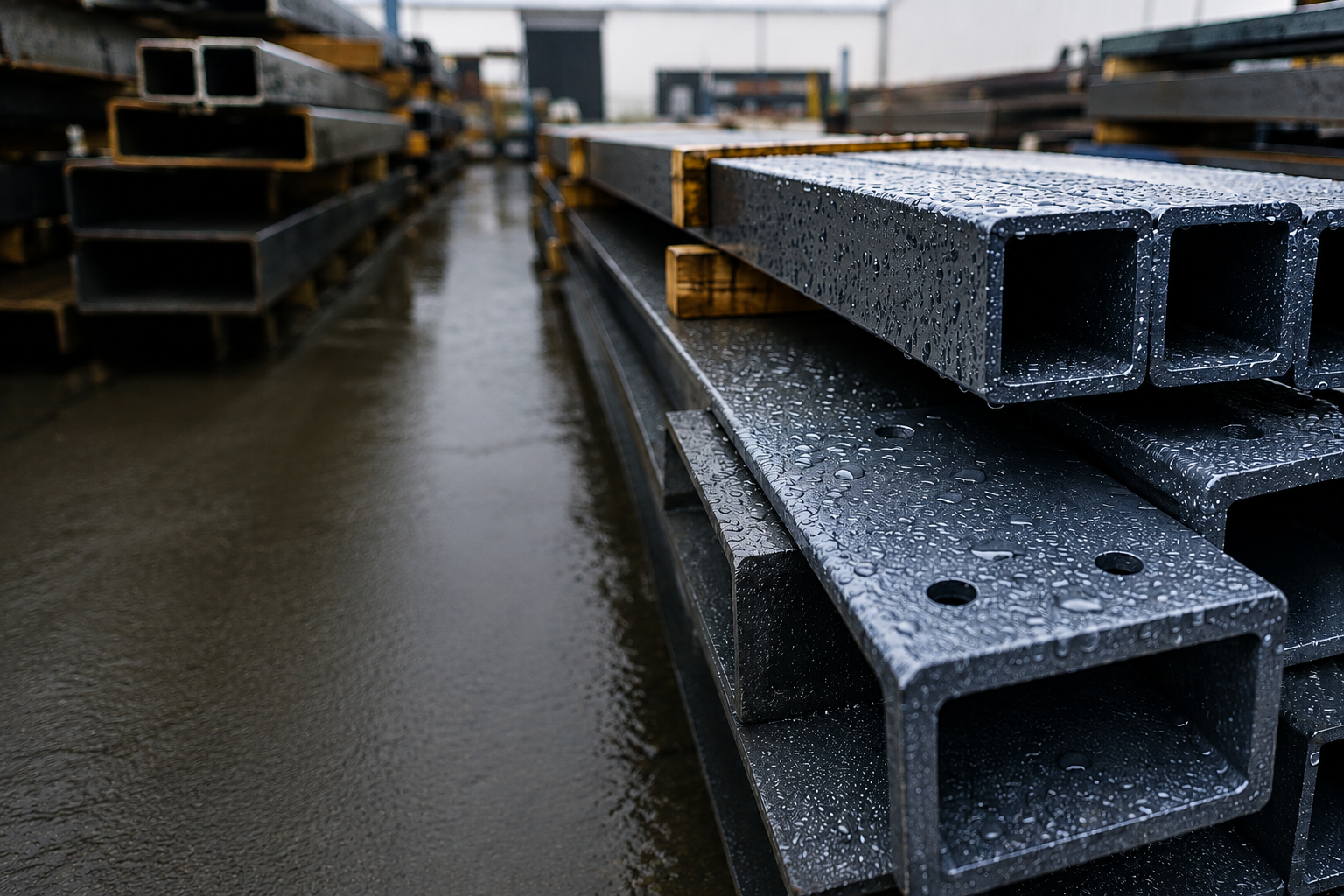
Storing metal components, machinery or equipment outdoors can create a major challenge: how do you prevent rust and corrosion while they are exposed to the elements?
Rain, moisture, humidity and changing temperatures can all contribute to corrosion. Even metal that appears well protected when it enters storage can begin to deteriorate if it is left exposed for an extended period.
For manufacturers, engineering companies and industrial businesses, rust isn’t simply a cosmetic problem. Corrosion can affect the condition of components, increase cleaning and maintenance requirements and potentially result in costly repairs or replacement.
So, how can you prevent rust on metal during outdoor storage?
Why Does Metal Rust During Outdoor Storage?
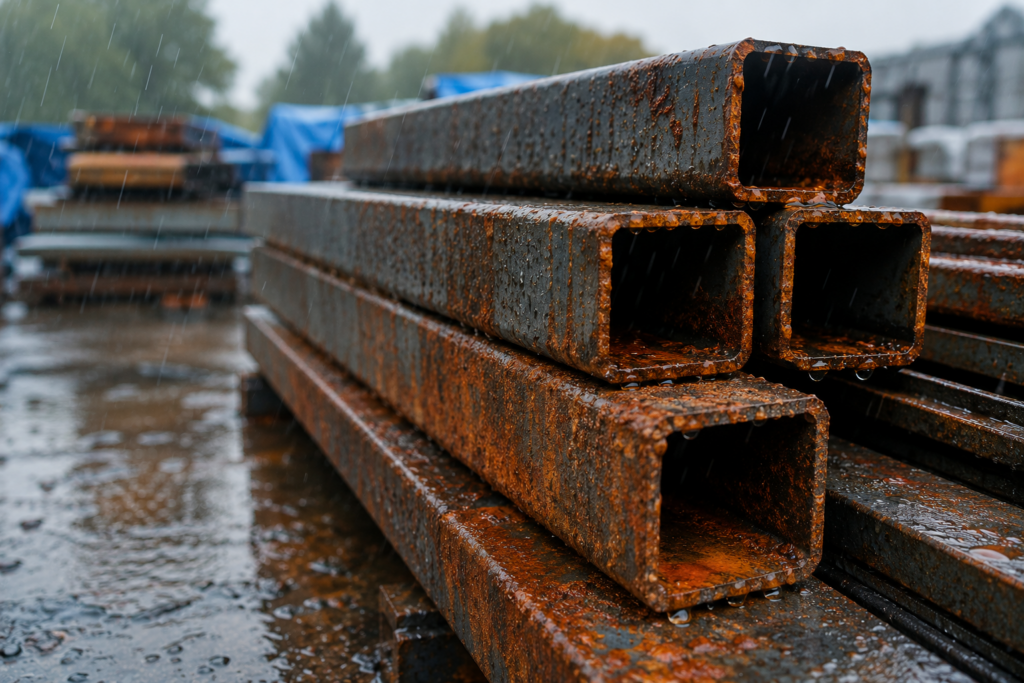 Rust occurs when iron or steel is exposed to oxygen and moisture. Outdoor storage creates an environment where both can be difficult to avoid.
Rain is an obvious concern, but it isn’t the only source of moisture.
Humidity, condensation and repeated temperature changes can also expose metal surfaces to moisture. Over weeks or months, this can lead to corrosion developing on unprotected areas.
The risk can become particularly important when storing:
- Steel components
- Fabricated metalwork
- Industrial machinery
- Manufacturing equipment
- Spare parts
- Tools and engineering components
- Metal awaiting transportation or installation
The longer the storage period, the more important it becomes to consider suitable temporary rust protection.
What Is the Best Way to Protect Metal Stored Outside?
There are several methods used to protect metal during outdoor storage.
Depending on the component and storage conditions, these can include covers, wrapping, oils, greases, corrosion inhibitors and temporary protective coatings.
However, the right method needs to do more than simply cover the surface.
An effective outdoor metal protection system should help prevent moisture from reaching the substrate while remaining practical to apply and remove when the component is required.
This is where temporary peelable protective coatings can offer an alternative.
Using a Peelable Coating for Temporary Rust Protection
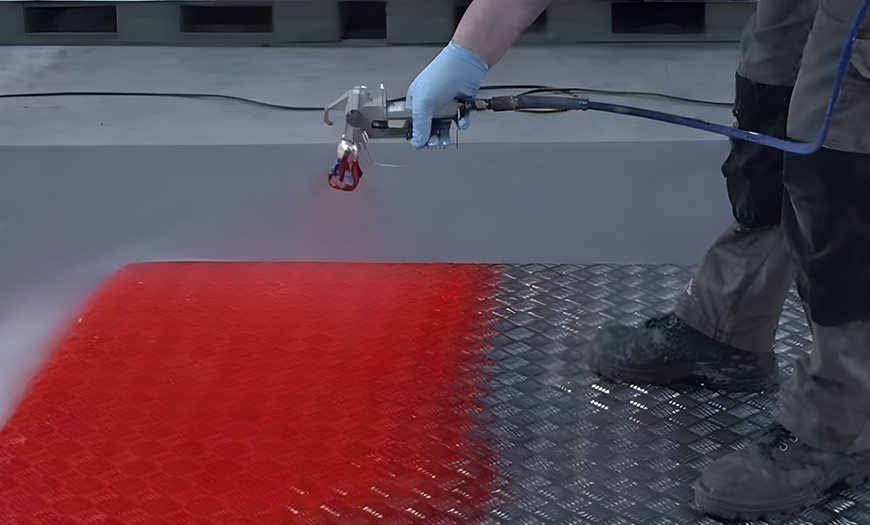 A liquid-applied peelable coating creates a continuous protective barrier directly over the surface. Unlike sheets or wrapping, the liquid coating can follow the shape and contours of the component being protected.
Once dry, the coating forms a protective film that helps isolate the underlying surface from its surrounding environment.
When protection is no longer required, the coating can be removed to reveal the protected surface underneath.
This makes peelable coatings particularly useful where metal needs temporary protection during storage, transportation or different stages of manufacturing.
Protectapeel Anti-Rust for Outdoor Metal Storage
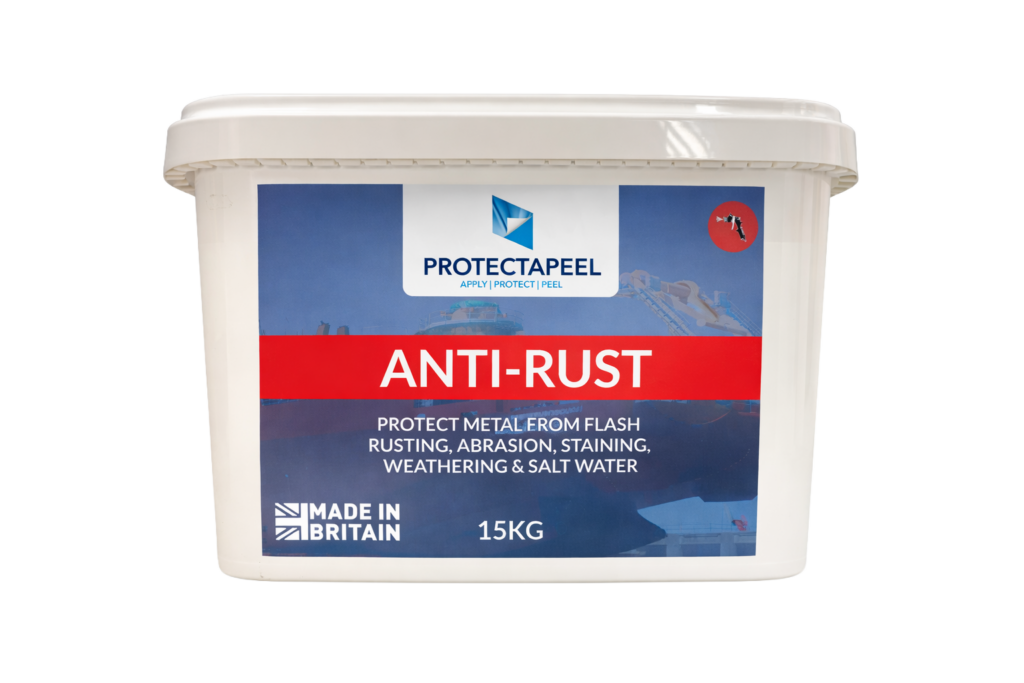 Protectapeel Anti-Rust is a temporary protective coating developed to protect suitable metal surfaces against corrosion.
The liquid-applied coating dries to form a protective barrier over the surface, helping to protect metal components and equipment while they are being stored or transported.
Protectapeel Anti-Rust can be particularly useful for manufacturers and industrial businesses that need temporary corrosion protection without leaving a permanent coating on the finished component.
Once the protection is no longer required, the dry coating can be peeled away.
Tested for Corrosion Protection
When choosing temporary rust protection, performance is particularly important.
Protectapeel Anti-Rust C5 High has undergone 1,440 hours of salt spray testing in accordance with EN ISO 12944-6 and EN ISO 9227.
Salt spray testing provides a controlled method of assessing the corrosion resistance of protective coating systems under aggressive conditions.
This makes Protectapeel Anti-Rust an option for businesses looking for a tested temporary protective coating for metal components and equipment.
Benefits of Temporary Peelable Rust Protection
Using a peelable coating for temporary outdoor metal protection can provide several advantages.
Because the coating is applied as a liquid, it can cover complex shapes and areas that may be awkward to protect using conventional sheet materials.
Once dry, the coating creates a continuous protective layer over the surface.
When the component is ready to be used, transported, installed or moved to the next stage of production, the temporary coating can simply be removed.
This can help reduce the need for cleaning away oils, greases or other temporary protective materials before the component is put into use.
Temporary Protection During Storage, Transport and Manufacturing
Rust protection isn’t only important when equipment is sitting in a storage yard.
Metal components may be exposed to moisture and changing environmental conditions throughout the supply chain.
For example, protection may be required while components are:
- Awaiting assembly
- Stored between manufacturing processes
- Transported between facilities
- Stored outdoors before installation
- Awaiting shipment
- Held as spare parts or stock
Applying temporary protection earlier in the process can help keep suitable metal surfaces protected until they are required.
Choosing the Right Temporary Rust Protection
There isn’t a single corrosion-protection method that is suitable for every metal, environment or storage period.
Before applying any temporary protective coating, the substrate, required protection period and expected environmental exposure should all be considered.
A test patch should always be carried out before full application to confirm compatibility with the substrate and ensure the coating can be cleanly removed.
Correct surface preparation and application thickness are also important for achieving the intended level of protection.
Protect Metal During Outdoor Storage with Protectapeel
Leaving metal components and equipment exposed outdoors without suitable protection can lead to unnecessary corrosion, cleaning and maintenance.
Protectapeel Anti-Rust provides a liquid-applied temporary protection system designed to help protect suitable metal surfaces against corrosion during storage and transportation.
Once the protection is no longer needed, the coating can be removed to reveal the protected surface underneath.
Need help protecting metal components, machinery or equipment from corrosion?
Contact the Protectapeel team to discuss your application and find the most suitable temporary surface protection solution.