As temperatures drop and the boating season comes to an end, protecting your vessel is an important part of winter preparation. Whether your boat is stored ashore, in a marina or within a covered facility, exposure to moisture, dirt, changing temperatures and environmental conditions can affect its appearance and condition.
Knowing how to protect a boat during winter storage can help prevent unnecessary surface damage, reduce maintenance requirements and ensure your vessel is ready for use when the warmer months return.
From traditional boat covers and shrink wrapping to temporary protective coatings, there are several ways to protect vulnerable surfaces throughout the winter months.
Why Is Boat Protection Important During Winter Storage?
Boats are designed to withstand challenging marine environments. However, extended periods of inactivity can introduce additional risks, particularly when vessels are exposed to winter weather or stored within busy boatyards.
During winter storage, boats may experience:
- Moisture and condensation: Damp conditions encourage mould, mildew and corrosion.
- Dirt and environmental contamination: Dust, salt deposits, bird droppings and airborne pollutants accumulate on exposed surfaces.
- Surface scratches: Accidental contact with tools, equipment and other materials can damage finished surfaces.
- UV exposure: Prolonged sunlight can cause deterioration of certain materials and finishes.
- Temperature fluctuations: Changes in temperature can affect seals, fittings and other components.
Taking preventative measures before placing a boat into storage can help minimise these risks and reduce the amount of cleaning and maintenance required when the vessel returns to service.
Protecting Boat Hulls and Exterior Surfaces During Winter
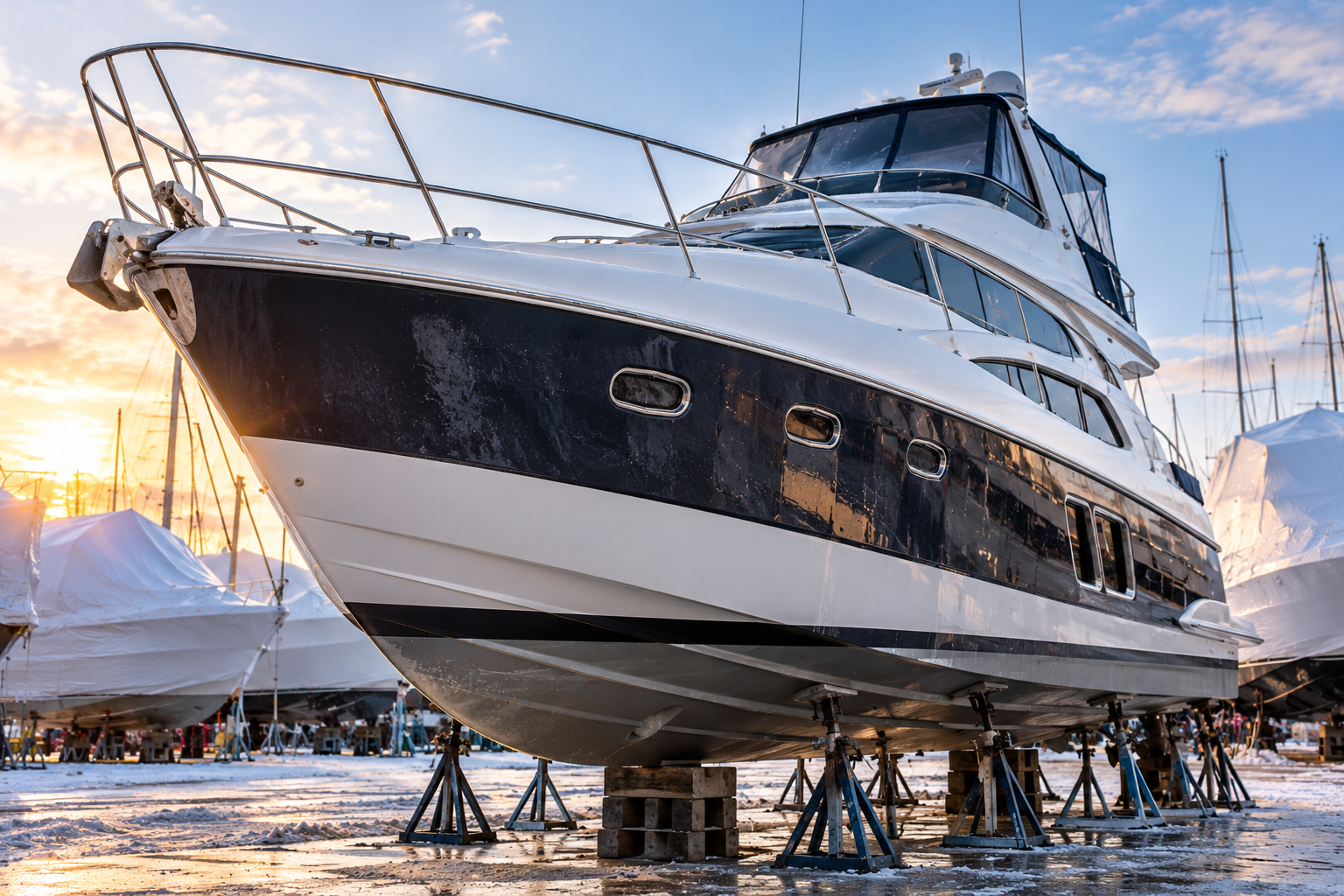
Boat hulls and exterior surfaces can remain exposed to environmental conditions for several months during winter storage. Even when a vessel is stored ashore, dust, dirt, accidental contact and ongoing boatyard activities can create opportunities for surface damage. Traditional protective methods include boat covers, tarpaulins and shrink wrapping. These provide varying levels of protection depending on the material, installation and storage environment. However, certain applications may also benefit from temporary liquid-applied protective coatings.
Unlike loose coverings, liquid-applied coatings are designed to form a protective layer directly over compatible surfaces. This can be particularly useful when protecting individual components, curved areas or surfaces that may be difficult to cover using conventional materials.
How to Protect Boat Windows and Glazing During Storage
Boat windows, windscreens and other glazed surfaces can be vulnerable to scratches during winter storage. Activities within busy marinas and boatyards involve equipment, cleaning and maintenance taking place close to the vessel. Without suitable protection, accidental contact or incorrect cleaning methods can result in damage. Temporary peelable protective coatings can provide an additional barrier over compatible glazing surfaces, helping to protect against dirt, scratches and other construction or maintenance-related contamination.
Protectapeel offers specialist temporary surface protection coatings for a range of applications, including marine glazing and other non-porous surfaces.
Boat Covers, Shrink Wrapping and Protective Coatings: Which Is Best?
There is no single protection method suitable for every boat or storage environment. The most appropriate solution depends on the vessel’s size, storage location, exposure conditions and the surfaces requiring protection.
Traditional Boat Covers
Boat covers are commonly used to protect vessels from rain, dirt and environmental contamination. They can provide a practical solution for seasonal storage, particularly when correctly fitted and supported to prevent water accumulation. However, poorly fitted covers may move in windy conditions, potentially causing rubbing or abrasion against exposed surfaces.
Boat Shrink Wrapping
Shrink wrapping creates a fitted protective enclosure around a vessel and is frequently used for winter storage. When professionally installed with appropriate ventilation, shrink wrapping can provide effective protection against environmental exposure. However, shrink wrapping generally protects the vessel as an enclosure rather than providing a protective barrier directly over individual surfaces.
Protectapeel Protective Coatings
Protectapeel marine protective coatings offer a different approach by protecting surfaces directly. Rather than enclosing the entire vessel, suitable coatings can be applied to compatible areas requiring additional protection against dirt, contamination and accidental surface damage.
This can make them particularly useful for boatyards, yacht manufacturers and maintenance facilities where individual surfaces need protecting during storage or ongoing work. Protective coatings and shrink wrapping are not necessarily direct alternatives.
How Protectapeel Can Help Protect Marine Surfaces
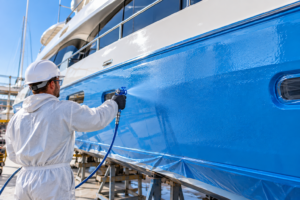 Protectapeel is a spray-on, peel-off temporary protective coating. Design to protect surfaces during manufacture, maintenance, transportation and storage. Used across the marine industry, Protectapeel provides a practical solution for protecting against accidental damage and contamination.
Protectapeel coatings can help protect:
- Marine glazing and windows.
- Finished surfaces.
- Metal components and fittings.
- Hull and superstructure surfaces.
- Surfaces exposed to maintenance and refit activities.
Applied directly to the substrates, Protectapeel forms a temporary protective barrier that can be removed when protection is no longer required. The coating is removed by hand peeling, revealing the protected surface beneath without adhesive residue, reducing repairs and cleaning costs.
A More Considered Approach to Temporary Protection Waste
Temporary protection materials can contribute to waste generated during boat maintenance, storage and refurbishment. Spraylat’s commitment to improving the end-of-use management of its peelable coatings is supported by independent GreenCircle Certified verification of material recyclability. This provides marine businesses with an opportunity to consider not only how surfaces are protected, but also what happens to the protective material once it has completed its purpose.
Discover Protectapeel Marine Surface Protection
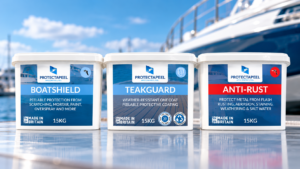 Spraylat International manufactures the Protectapeel range of temporary protective coatings, offering specialist surface protection solutions for marine manufacture, maintenance, refit and storage applications.
Whether you need to protect marine glazing, painted surfaces or vulnerable components, our team can help identify a suitable product for your application.
Contact Spraylat International to discuss your marine surface protection requirements and discover how Protectapeel could help protect your vessel.