
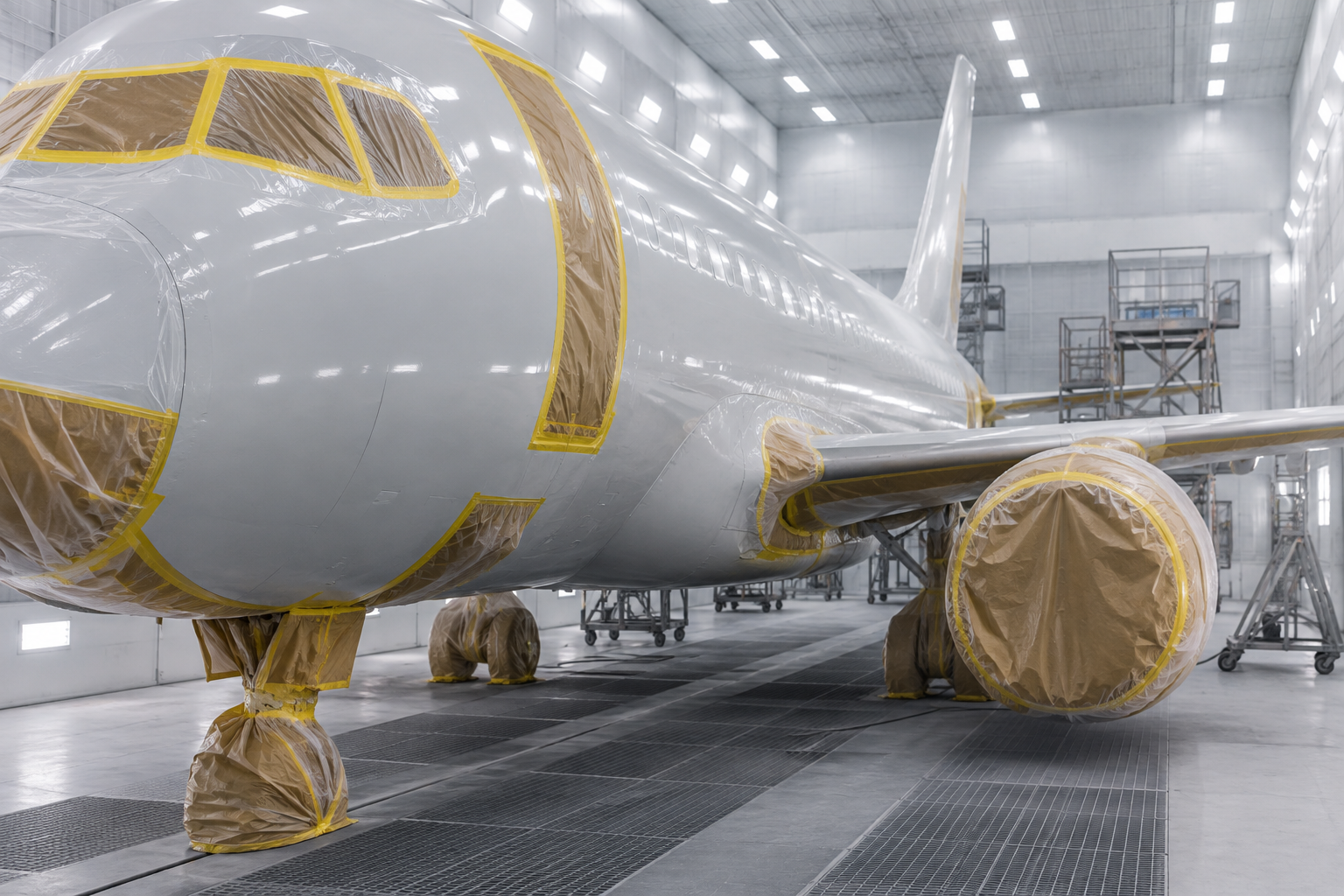
Foreign Object Debris (FOD) is a major consideration throughout aircraft manufacturing, maintenance and refinishing operations. During aircraft painting in particular, loose masking materials, dust, debris, paint contamination and other foreign objects can create unnecessary risks within controlled aerospace environments.
Effective FOD prevention during aircraft painting therefore requires more than good housekeeping. Careful preparation, masking and temporary surface protection can all help maintain a cleaner, more controlled working environment while protecting sensitive aircraft components and surfaces.
What Is FOD in Aerospace?
Foreign Object Debris refers to any object, material or substance that is somewhere it should not be and has the potential to cause damage.
During aircraft painting and refinishing operations, potential sources of FOD can include masking materials, tape, plastic sheeting, paper, coating fragments, dust, dirt and other loose debris generated during preparation and painting.
Controlling these materials is particularly important around sensitive aircraft areas, components and openings.
Why Aircraft Painting Can Increase FOD Risks
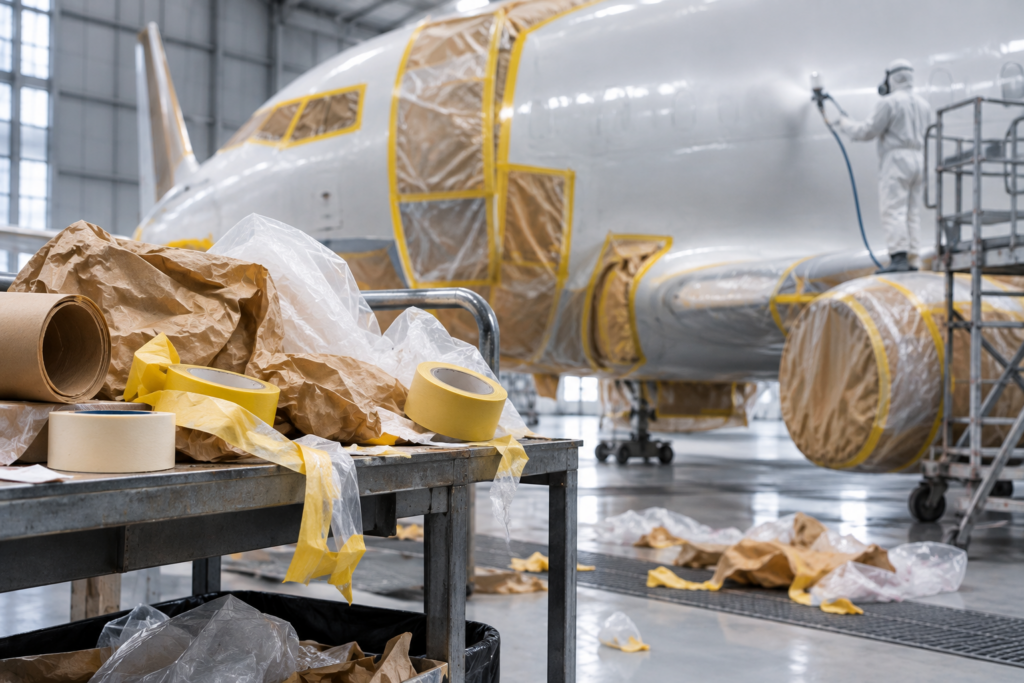 Aircraft painting involves several stages, including surface preparation, cleaning, masking, coating application and removal of temporary protective materials.
Traditional masking methods may require large quantities of tape, paper and plastic film. Each additional piece of material introduced into the working environment must be correctly applied, monitored and removed.
Paint overspray presents another challenge. Areas that are not adequately protected can become contaminated, potentially creating additional cleaning, preparation or rework.
Reducing the amount of loose masking material required and using controlled temporary surface protection can therefore contribute to an effective FOD management strategy.
Protecting Aircraft Surfaces During Painting
Temporary peelable coatings provide an alternative method of protecting suitable aircraft surfaces during painting, maintenance and manufacturing operations.
Protectapeel aerospace protective coatings are liquid applied directly to compatible surfaces. Once dry, the coating forms a continuous protective film that remains closely attached to the surface until removal is required.
This can help protect surfaces against:
- Paint overspray and contamination
- Scratches and abrasion
- Dust and dirt
- Staining and spillages
- General damage during manufacturing and maintenance
At the end of the operation, the temporary coating can be peeled away from the protected surface.
Reducing Loose Masking Materials
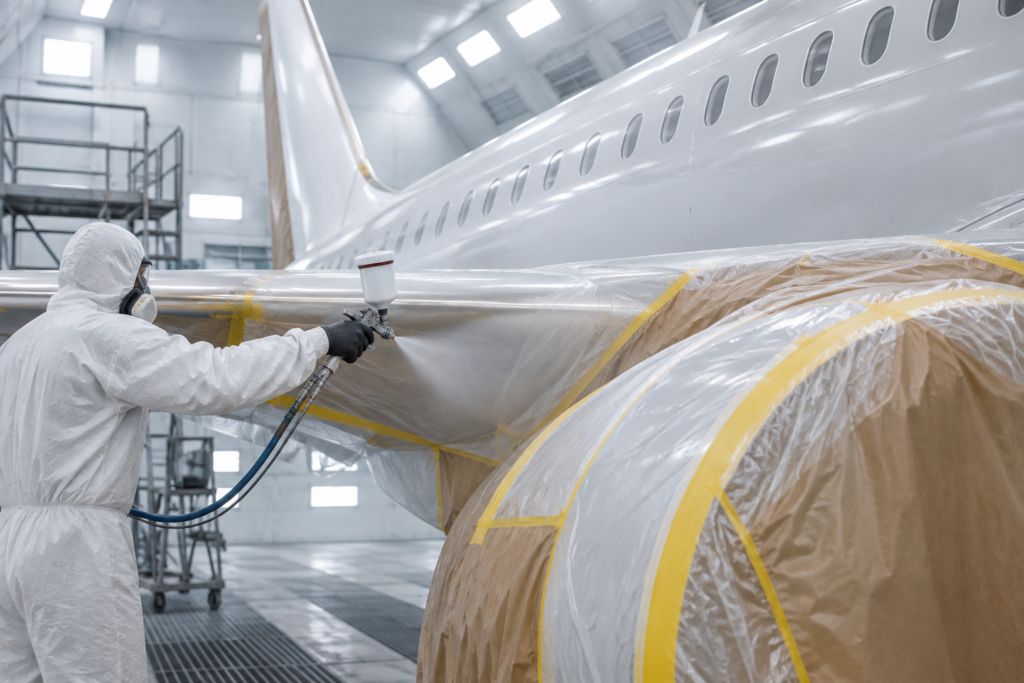 One potential advantage of liquid-applied peelable protection is the ability to reduce reliance on some conventional loose protective materials.
Where appropriate for the application, a continuous protective coating can cover complex surfaces without requiring multiple overlapping pieces of protective film.
Fewer loose materials within the working area can make protection easier to control and may help support established aerospace FOD procedures.
The suitability of any temporary coating should always be confirmed for the particular substrate, process and aircraft application before use.
Protecting Aircraft Canopies and Transparencies
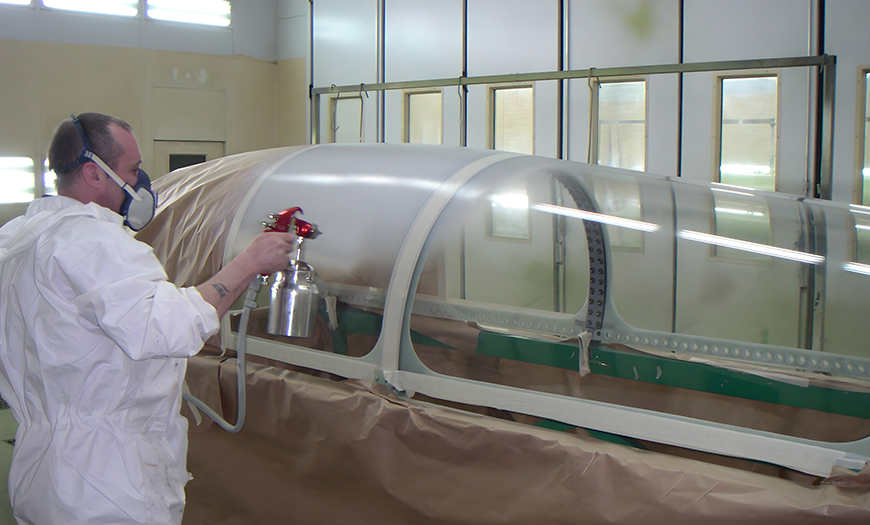 Aircraft canopies and transparencies are particularly vulnerable during production, maintenance and painting.
Overspray, scratching and contamination can affect these high-value surfaces, making effective protection essential throughout surrounding work.
Protectapeel Aerospace E100 is designed for temporary protection of suitable aerospace surfaces and can provide a removable barrier against contamination and physical damage.
The liquid-applied coating conforms to the surface before drying into a protective film, helping keep the underlying area isolated from surrounding activity until protection is no longer required.
Easier Visual Inspection and Removal
Good FOD management requires temporary protection to be easily identified and fully removed after use.
Peelable coatings remove as a film, making it easier to inspect the protected surface. Correct application thickness helps ensure effective protection and reliable removal.
Supporting Cleaner Aircraft Painting Operations
Temporary surface protection can support wider FOD prevention procedures during aircraft painting.
By protecting surfaces from overspray and reducing reliance on loose masking materials, peelable coatings can help maintain a cleaner, more controlled working environment.
Aerospace Surface Protection from Protectapeel
Spraylat develops temporary protective coatings for demanding aerospace applications.
Protectapeel coatings help protect aircraft surfaces, components, transparencies and tooling during manufacturing, maintenance, storage and painting.
Once protection is no longer required, the coating can simply be peeled away.
Looking to reduce contamination and FOD risks during aircraft painting? Contact the Protectapeel team to discuss your aerospace surface protection requirements.